Monday, May 7, 2018

Be prepared for your adventure: First-Aid


While the first thoughts of your upcoming adventure may be that of the amazing scenery or the interaction with nature at its finest, it should be if am I prepared. Being prepared ahead of your trip will help reduce worry and risk allowing you to enjoy nature. You can accomplish this by having a proper first-aid kit on hand. What do I mean by “proper”, well that simply means evaluating the nature and length of your adventure. Making decisions objectively based on research and common sense.  Asking yourself simple questions like: What might happen if I don’t have this, is this item necessary or am I missing something? Hikers are usually amazed by the number of redundant items they carry out of habit.


By now you may be asking yourself, OK, but what to take? This depends on the research you’ve done on the environment and length of your trip. With that information I suggest looking at some, if not all the following links (bottom of page) of first-aid items with descriptions. Also, you will want to minimize weight and bulk, so only carry appropriately sized quantities based on the length of your trip.

As a final tip, if you are regularly hiking or spending lots of time in the wilderness, I suggest that you take a First-Aid course. These courses will develop your skills in injury management, CPR and other lifesaving situations.

Stay safe, be prepared and enjoy all that nature has to offer fellow Lions.

Links for what to take in your First-Aid kit:


https://www.fastmed.com/health-resources/basic-first-aid-for-common-hiking-injuries/

Andorra and the Power of Diplomacy


As a rookie Lion of the Pyrenees, a lion cub rather, the participation in the event and trip to the Pyrenées will be very important for me. I know the Pyrenées only from the French side and have visited them for the first time – oh my Gosh – almost 33 years ago, together with my parents and sisters. I remember being served Pastis by my father somewhere in the middle of nowhere and spitting it all over the bus. Later we have visited Andorra – the little principality located in Southwestern Europe in Eastern Pyrenées. I am not sure, it might have been the pastis or maybe the tax free metal car toy which I have received in Andorra la Vella (the Capital of the principality), but I kept a special relationship with the country ever since.

My last encounter with the Pyrenées was of an academic nature and precisely with and about Andorra – I have received a scholarship for young and bright members of a catholic organization to study – You will not believe it, the political system of Andorra. Yes, I was about to become a specialist in microstates. Fortunately I was not that young or bright enough or the pastis served to a minor devastated my brain and I have not succeeded in my academic career.

But thinking of a topic for this year’s edition of the LION TIMES, I thought of something connecting me with our destination. And that is the power of Andorran diplomacy. In diplomacy we try to measure the efficiency of our work by checking reality against the desired vision of it. Likewise in business – we try to set our desired vision and understanding on paper. Assessing it is usually a very depressing exercise in which a random number generator or a blindfolded monkey picking a random collection of stocks perform better. But having studied the history of Andorra, I must say its diplomats have always performed tremendously well.


Imagine an area of 468 square km – a state the size of not even Madrid (604 square km) or Warsaw (519 square km) with a population of 77 thousand people. Barcelona being four times smaller (101 square km) has 20 times more inhabitants (1,6 mln). It is officially fully sovereign only since 1993 (it is in 1993 that it became the 184th Member of the United Nations), but it has kept a de facto independence from its more powerful neighbours for almost 8 centuries.

Why did it matter to me? Coming from a country which has not been spared by a single tide of history, was at war with practically every single of its neighbours, went through 300 years of partitioning, 50 years of communism and is back to the Western democratic community for only a quarter of a century, this peculiarity kept me awake at night for quite some time. This is what made me study the history of the Principality.

You can of course blame geography, the empty, rocky, lunar surrounding, the lack of natural resources, or the importance of the trading platform that the city of Andorra la Vella has always played. There is truth in all of this. But back in medieval times this was not quite enough to stop neighbours from invading each other and we all have plenty of examples in our history textbooks of wars being started out of pure vanity, personal animosities or pure boredom.  And Andorra was the subject of pressures and attempts to be seized, invaded, controlled almost constantly throughout the last 10 centuries.


What happened? Here comes the mastery in diplomacy. Imagine the situation: Andorra claims its creation back to the times of Charlemagne. They are pretending to be the only survivors of the Marca Hispanica – these were the buffer states created by Charlemagne to keep the Islamic invasion from advancing into France. The inhabitants of the Andorran Valley would later receive a Charter from the king grateful for keeping the Moors at bay already in the 9th Century. But since 1248 the Principality of Andorra enjoys a double hatted ruling, shared between the Count of Foix and the catholic Bishop of La Seu d’Urgell (today’s Catalonia). Both rulers were equal and both agreed to preserve Andorra’s territory and political form. In return, Andorra payed an annual tribute called questia. According to history books they had to pay a contribution of four ham legs, forty loaves of bread and some wine. And for this tribute Andorra’s borders remained unchanged since (which equals to 770 years).

Impressive, isn’t? Did it all happen smoothly? Of course not. There were ups and downs. But each time one of the co-rulers wanted to raise the tribute or tried to invade the valley-principality, its diplomats would run to the other co-ruler to complain. It created a system of perfect checks and balances allowing Andorran to pass from century to century by bullying one co-ruler against the other. So when the angry Count would send his army to pillage Andorra la Vella, the Bishop would immediately send a regiment to counter any attempts to seize control over co-territory. With this, Andorra never needed to develop its own army. Their surrounding changed dramatically, power passed from hand to hand, the County of Foix was absorbed by the Kingdom of France, but Andorra remained.

By the way, even the 1993 constitution was signed by the two co-rulers which were President Francois Mitterrand of France and Joan Marti Alanis – the Bishop of Urgell. Andorra has become sovereign parliamentary Principality, but The President of France and the Bishop remain two official, constitutional Heads of State until today. They are locally represented by so called Vicars (in the case of France it is always the Prefect of the French Eastern Pyrenées Department. Also until 1993 Andorra was represented in its foreign policy by France. But today it has a full-fledged diplomacy, with a minister. All of that most probably to be able to steer one co-ruler against the other in case of need… and I am sure they will succeed. 

In the shelter of the Pyrenees: the Somontano Wines, a brief introduction.


By Pablo Campos

Bonum vinum virorum animos laetificat
(good wine lifts the spirits of men)

Somontano means “at the mountain’s foot”. Well, in this case we are not talking of a small and lonely mountain, but in the shelter of the mighty Pyrenees. The term Somontano neatly defines a whole geographical area where this designation of origin has taken residence. It is a transition region, located between the Ebro’s valley and the Pyrenees. I guess the technical name would be something like the “pre-Pyrenees”, although somehow that doesn’t seem like an accurate nomenclature.


Where the Pyrenees begin to rise a whole variety of about 15 kinds of grapes, both local and foreign, find a perfect place to grow. And they do it in about ten thousands of acres of land.

The soil has a combination of sandstone and clay, mixed with a considerable amount of limestone and alluvial material. It is not the most fertile of land, although the drainage is of certain level. The altitude for this wine oscillates between 350 and 650 meters.

We owe it to the Romans who, through their appreciation of a gentle glass of wine, sought the means to consolidate this grapevine. Their endeavors where further developed by the unrelenting influence of the local monasteries during the Middle-Ages. Nowadays, the wines from the Somontano can be fully appreciated by us consumers, allowing us the simple pleasure of tasting the fruits of this green and abrupt corner of the Iberian Peninsula.

Lions 2018 Meeting the Brown Bears of the Pyrenees!


By David Steinegger

Background

Brown bears had been prevalent in the Pyrenees for thousands of years until the 20th century. In the 1900s, some 150 bears roamed the habitat in the Pyrenees. The population halved by the 1950s, as action was taken to protect farm livestock.

In the 1970s the French government took action to protect bears, but this came too late, with almost all of the bears disappearing. Various initiatives followed to grow the population, including the transfer of brown bears from Slovenia, but this met with limited success due to the small numbers involved.

In 2005 efforts were redoubled, and the population gradually increased, helped by the employment of over 100 people to help in conservation measures.

Bear habits and habitats

Bears have an extensive range with male bears roaming territories as large as 500 square kilometres. They do this in search of food, shelter, mates and more. In winter the bears hibernate for around four months from late November to March, and typically do so in rocky caves.

Bears are generally herbivorous but the bear is also omnivorous. Diet includes fruit, vegetation, insects and wild and domestic animals, both dead and alive.


Adapting to bears in the farming community

Changes are happening in the community to adapt to the presence of the bear. The sheep population in the Pyrenees is estimated to be over half a million and hundreds of sheep are lost each year to bear attacks. The French government pays compensation to the farmers for any loss of animals due to such attacks. Various measures have been put in place to minimise these losses including on location shepherds, sheep dogs and selective use of electric fencing.

Size, weight and expected life span of bears

The Pyrenees Brown bears can weigh up to 300kgs for the males and up to 90 kgs for the females. Standing up their height approaches 2 metres. Bears can typically live up to 25 years in the wild.

So if you spot a bear …

Generally the bears will do all they can to avoid humans. They have excellent sight and smell and will generally disappear before you can spot them. If taken by surprise however they can react adversely and pose a threat. Best advice is:

1.      Never attempt to come into close contact (less than 50m) with a bear
2.      Never follow bear tracks if you come across them.
3.      If you come across one, calmly make your presence known by moving or talking slowly and quietly.
4.      Slowly distance yourself from the bear, avoiding the path the bear is most likely to take in his flight from the encounter.
5.      Never, ever run.

Conclusion

If you go down to the woods on our May 2018 trip, you had better not go alone. Because even though you are a Lion, those bears can give you a scare!

David Steinegger
11 April 2018


Intro by Antonio


Dear Veteran and Rookie Lions,

As we are celebrating these important days of Holy Week with our families, we cannot but think that in just under six weeks’ time we will be meeting again at Barcelona Airport to start another of the very enjoyable “Lions Pyrenees Expeditions”.

Time really flies by. When I was meeting a friend the other day and I told him that we have been doing this Expedition for eighteen years he could not believe we had managed to keep it going for such a long time; and he encouraged me to continue doing it. That is clearly our intention, and it was nice to see that last year at the Expedition Johnny Dauncey and Ovidiu Radu, sons of two veteran Lions joined us, and now they are themselves part of this group of adventurers.

I appreciate that our encounters with most of the Lions are limited to once or twice a year, one during the Expedition itself when we go around the Pyrenees and the other at the Lions Annual Dinner in the Oriental Club in London, which due to the help of its Secretary-General, Matthew Rivett (a Veteran Lion himself), has become the London headquarters of this adventurous group. As we are spread around the world, it is not possible to meet many other times but with some regularity during the year I receive either a telephone call or an email from one of the Lions and this way we keep in touch despite the distance.


As the years go by, many people have heard of the existence of the “Lions of the Pyrenees”, and this year as I travelled to different locations some contacts, relatives, clients, were impressed when they learnt that I belonged to this distinguished group, with such an imposing name. To make them aware of my belonging to the team I regularly wear the Lions Polos. I appreciate I cannot use it when I go to work in the City of London, but when I am on holidays or on weekend I do so that I remind others who we are.

This year like every year there will be some new faces of people joining us for their first expedition, but as it is always the case, they will be welcome by the others, and when those intense days come to an end after four intense days in the Pyrenees, they will experience like the rest the impression that they have known the group for a long time.

We all know that we go to the Expedition to have a good time, but the main purpose is to make the others have a good time, this way we all enjoy it much more, when we see the others enjoying it and the camaraderie of the group makes people help each other without expecting anything back. It is not difficult to give thanks to God during those days for the many benefits received during the rest of the year; either at home, at work, or due to health, or other matters. Also as our base camp is near the Shrine of Our Lady of Torreciudad we have established the tradition of going up to see her with the uniform of the Lions (the Polo of the Lions) and as we approach the shrine at the end of those marvelous days one cannot but be grateful to God and to Our Lady for the fact that we have been able to enjoy these fantastic days, despite the difficulties that we all have experienced during the year; and we leave at Her feet our personal intentions and our gratitude as we were able to go another year, and ask that we will be able to go back the following year.

Well men, I finish by wishing you and your families a Happy Easter. Forward Men!

Ave Cesar, Morituri Te Salutant!¡

A Lion of the Pyrenees
Antonio Irastorza

Tuesday, May 16, 2017

If Lost While Hiking


By Ovidiu Radu

Once lost
  • Do not panic. That is the worst thing you can do and will likely cause things to get worse.
  • Follow the STOP rule


Stop – As soon as you realise you may be lost, stop, stay calm and stay put. If you keep going you are likely to get even more lost. Sit down, take some water and eat something.

Think – How did you get to where you are? What landmarks should you be able to see? Were you heading North or West? Where were you when you were last sure you knew where you were?

Observe – What can you see? Where on the map is it? Where is the sun in the sky? Roughly how long until sunset? What does the weather look like it is going to be? What supplies do you have? How long will they last?

Plan – Never move until you have a plan. Based on your thinking and observations, come up with some possible plans and then act on the best one.


  • Check for phone coverage. If you have some then you can call for help. They may be able to explain how to get home or they may come to get you.

  • Use a whistle to try and attract attention. Three blasts is the universal signal for help.
  • If you have any bright items get them out as it will make it easier for a rescuer to find you.
  • If you are confident enough you may wish to try and retrace your steps to find the path you were on earlier.

Staying the night

  • Find a sheltered spot that will keep you from the rain and wind before it gets too dark
  • You will likely need to put on extra layers to avoid hypothermia setting in.
  • Do not sleep beside a river as the noise might mean you cannot hear a rescuer.
  • Start a small controlled fire. This will give you some warmth but also the smoke is a good way to signal for help.
  • Create a HELP or SOS sign with rocks in a clearing. This will make you more visible from the air.
  • Hang any colourful items of kit from tree branches around you. This will make it easier for a rescuer to find you.

Tuesday, May 2, 2017

Briefing by Sir Anthony Irastorza

Dear Veteran and Rookie Lions,

Time flies and in just a few weeks we will all be meeting at Barcelona Airport ready to start this yearly event. I am looking forward to meeting all of you there.

It is always nice to experience the reputation of the “Lions of the Pyrenees”, frequently beyond of what we deserve. I was travelling for work a few weeks ago in a European city and I met a client; to my surprise he knew one of our early Lions, who had informed him of our adventures; but the way he described what we do was a little exaggerated, so I had to correct one or two things. It is always nice to be recognised and admired, but I think it has to be always within reality. In any case whenever I travel or play sports many times I wear one of the Lions polos, you will not believe me if I tell you that on many occasions people ask me for one, I tell them that for them to be able to wear it, they have to earn it, they have to suffer, they have to deserve it; otherwise it takes away the joy of wearing it. And they all respect it.

As I informed you in one of my emails, a few weeks ago, on 14 March we had the death of our first Padre, Don Javier Mora-Figueroa, for those of us who knew, he was a real friend and always welcoming to the Lions; as being the Rector of Torreciudad, he was like the king of Torreciudad and could get anything done for us. Like the Mayor-President of El Grado, who also died a few years ago of liver cancer and was another “honorary Lion”; I feel that we should not be sad, but happy to have two local friends from our base camp in the Pyrenees in heaven. We can ask them to help us from up there.

I appreciate that as the Expedition comes closer, there are always difficulties and problems do arise. It is normal, we have to try to overcome them, as those of us who have come before will realize how much benefit we obtain from those days in the mountains. It is much more than the sport, the challenge; it is also the camaraderie and the mutual help of this group of friends who help each other to have a good time, helping in small and bigger things, and we all contribute to it.

In the same way that last year Jonny Dauncey (son of Tim Dauncey) came as one of the doctors of the Expedition; and he was the first son of a Lion to join the group; this year Ovidiu Radu (son of Vergiliu) will join us from Germany via Moldova. It is a great pleasure to see the group grow in this way. Even if we have come for so many years to this area, Fyrky and the other professional Mountain Guides ensure we do different things, we go to different valleys, mountains, ravines or canyons. The Pyrenees are not only wild and large, but they are always changing, and the weather conditions (snow, rain, sun, etc) make them look different.

Even if I have been in those Expeditions since the beginning, I always feel that the last one is the best; as the “spirit” of the Lions is seen in action, mutual support and help, interesting conversation, camaraderie which goes beyond duty, etc. It is a pleasure to see that others enjoy as much as I do. We all understand that one enjoys it more, when we try to make life agreeable to others in small things, and for this I am grateful to all veteran Lions. Just a word of warning, do train and keep training, but with moderation; as we have had some injuries. I myself twisted my ankle a few weeks ago whilst I was with clients in Barcelona and I have a bandage and a swollen foot. I spoke to a doctor and I am following his advice in every aspect; God willing I will recover soon.

As we go away, we remember our families and we train with them, as it is precisely due to our families support that we are able to do this; for this reason it is great to see that some Lions are being followed in this group of friends by their sons, as I told you before.

Ave Caesar Morituri Te Salutant!

A Lion of the Pyrenees

Antonio Irastorza

Pyrenees – the famous mountain range in Europe


By Dan Rusu


de_rusu@yahoo.com


Three of the most famous mountain ranges in Europe: the Alps, the Carpathians and the Pyrenees – are extremely different from each other.


The longest range of them – the Carpathian Mountains – is low and almost everywhere up to the top was covered with forest. Its soft picturesque view does not change even in the gorges of the fast Carpathian rivers. Mountain streams can be called only conditionally: on them even fused timber rafts.

The highest mountain range – the Alps – in fact, not even the ridge, and the whole mountainous country of several parallel chains of mountain ranges, and worm-sawn numerous glaciers. The highest Alpine peaks rise above the surrounding mountains at 2,000 meters, but passes through the ridges, thanks to the tireless work of the glaciers, are low and easily accessible, with the possible exception that the area of Mont Blanc and the Matterhorn.

Pyrenees cane, no doubt, be called the most inaccessible of all the mountain ranges of Europe. Although their highest point – the peak of Aneto – is almost half a kilometer below the Mont Blanc, the average height of the Pyrenees is more than the Alps. Lined up in an orderly line up, the snow-capped Pyrenean giants are mostly about the same height, and to find a gap in their ranks is not easy. Therefore passes through the Pyrenees are on average twice higher than the alpine passes.


Until recently, no railway crossed the Pyrenees, bypassing their Atlantic and Mediterranean coasts. In the Central Pyrenees, there are places where for three hundred kilometers of the road no one passes through, lying at an altitude of about two and a half kilometers away, and to get from France to Spain, you can only follow shepherd trails.

Pyrenees represent an ideal mountain system: long straight chain mountains, from which, like the branches, extend side spines mostly directly opposite each other. Located between the transverse ridges of the valley deepened rabid mountain streams to such a degree that often resemble the American Grand Canyon. In the upper valleys are located glacial cirques - rocky amphitheater engaged once the glaciers. From the walls to the bottom of circuses thwarted waterfalls tape.

The biggest and most famous cirque is in the upper reaches of the river Gave de Pau in the north, in France, and is called Gavarni. It is much greater than the size of alpine cirques, but became famous in the first place, not for the size, but for its spectacular waterfalls.

Located at the foot of the circus Gavarnie, the second highest mountain in the Pyrenees - Monte Perdido, which reaches 3,356 meters and is only fifty meters inferior to the peak of Aneto. If the Matterhorn in the Alps is justly considered the most beautiful of granite peaks, the Monte Perdido can be called the most beautiful limestone top.

The limestone slopes of the southern slope of the Pyrenees, in recent years opened many karst caves, and it turned out that people lived in many of them are still in the Stone Age. Archaeologists have found here the rock carvings, clay figures and objects of everyday life of our ancestors.

In the Pyrenees is located, in particular, the second deepest cave of the world - a karst abyss Pierre-Saint-Martin, disappearing into the bowels of the mountains at 1,171 m, and the third largest cave system Trombe depth of 911 meters. (Deeper than them are only cave Rezo Jean-Bernard in Dolomites, reaching 1,602 meters.)

The Pierre Saint Martin is also the world's second biggest underground room: length 220, width 180 and a height of 150 meters! Large size underground cavities exists only in the Carlsbad Caverns in the USA.

As with other streams of karst areas, Pyrenean rivers often "disappear", diving in underground burrows, and then re-appear ten or twenty kilometers below. In the conditions of mountain terrain, this leads to the fact that in the interior there are sometimes fantastic complexity and picturesque karst masterpieces. For example, one of the rivers flowing through Sigaler cave, time to form a 52 underground waterfall to eighteen meters high!

It goes underground and the largest of the rivers beginning in the Pyrenees – the main river of southern France – Garonne. Its origins are in the south, the Spanish side of the ridge, near the peak of Aneto. It runs a few kilometers from its superior glacier, the river breaks waterfall off a cliff, and then dives into the karst abyss Trou de Tor. On the northern slope of the Pyrenees, Garonne is born again, appearing on the surface as a powerful source, named after the Eye of Jupiter. Collecting tons of water, the river is rapidly accumulating power high-water tributaries, and already from Toulouse it is a mighty waterway.

True lovers of the mountains, choosing to climb in the Western Europe, prefer to overcrowded Alpine slopes the hard way in the Central Pyrenees. And it's not seeking to have that travelers see sports climbing in these mountains. Deaf, devoid of roads and often trails, gorges, pristine nature, abundance of waterfalls, glacial cirques and caves provide the tourist a maximum of impressions.

The fauna of the Pyrenees is also better preserved than in the Alps. Here you can meet chamois and ibex, come across wild boars and bears, as well as very rare in European forests wolves.

THE “QUEBRANTAHUESOS” (The Beard Vultures)


By Pablo Goicolea Ruigomez

Macintosh HD:Users:Pablo:Desktop:quebrantasilueta.jpg


During my military service in Spain back in the 80’s, I was, so to say, “lucky” to be destined to the High Mountain Skiers corpse in Rioseta, near the Candanchú ski resort in the Pyrenees.

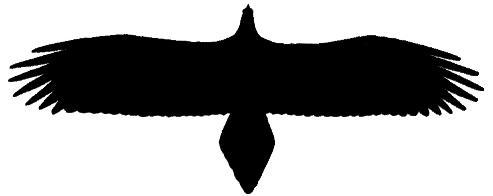
I remember clearly the moments when we were standing still in formation, with frostbite in our ears waiting for the morning review. No one dared to move, but I would somehow manage to glimpse to the sky to distract myself from the fact that it was freezing, always keeping my head looking front. Most of the times I looked, I would see a silhouette flying near el Pico Del Águila – a peak nearby, elegant as I had never seen before. Day after day, the same scene, it came out despite the snow, the stray wind currents, the storms, defying all the elements. It looked like an eagle but it flew like a vulture. I could not quite figure out what it was, so when I had the chance, I did a little research in a Bird’s book. This bird has an unmistakeable diamond-like tail with slim wings like a golden eagle.

Macintosh HD:Users:Pablo:Desktop:12070550EY.jpg

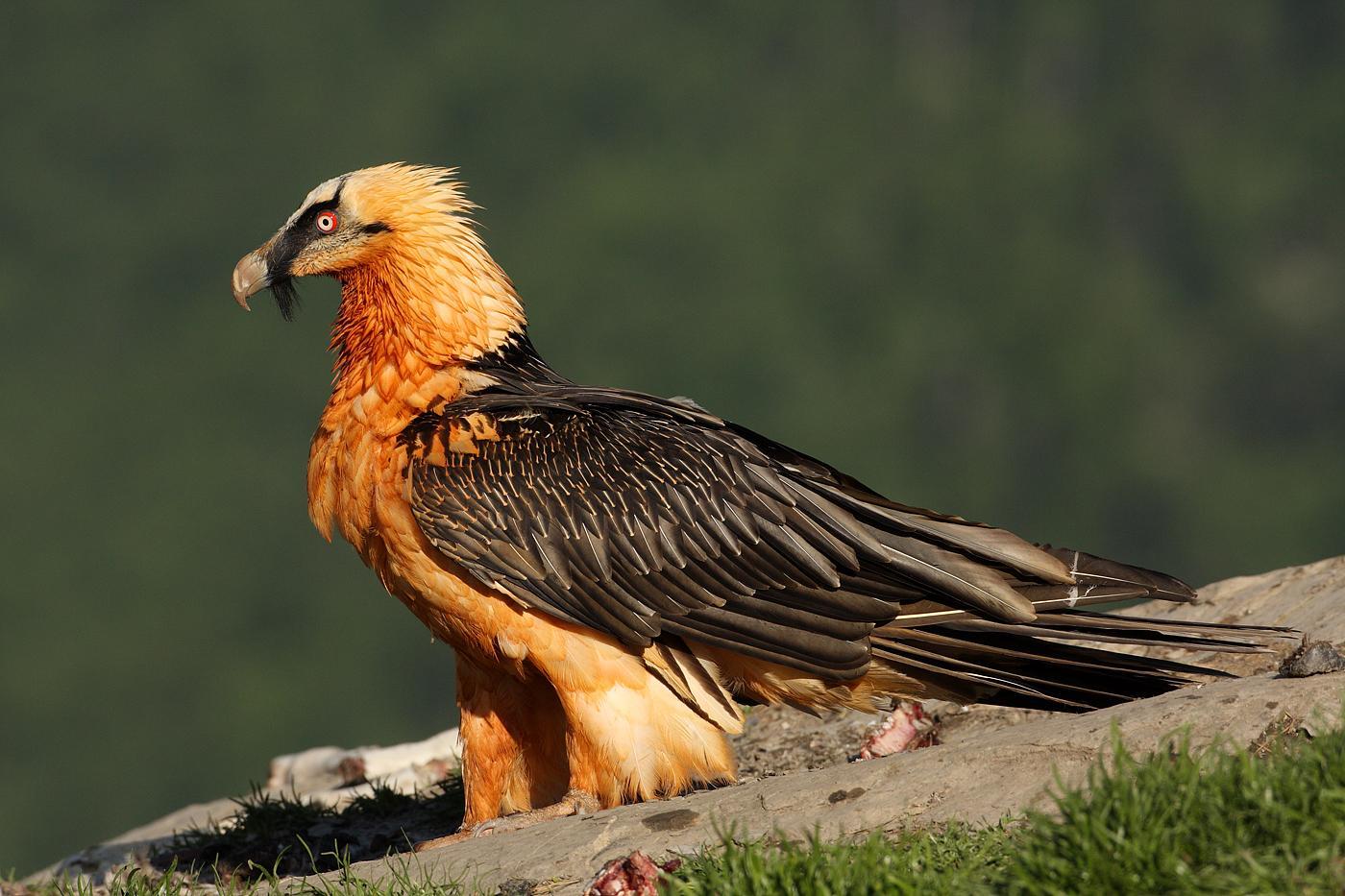
It was the Quebrantahuesos, literally translated the “Bonebreaker”, technically the Gyapetus Barbatus, and the Beard Vulture in English. It was a rare species of Vulture that almost led to extinction in Europe, where there are only a few couples left, spread around the Pyrenees. Luckily, in the past years the population has been recovering, and some couples have been introduced in the Alps, in Picos de Europa and in Sierra Nevada, where they were already extinct.

Macintosh HD:Users:Pablo:Desktop:quebrantahuesos-jose-luis-ojeda.jpg

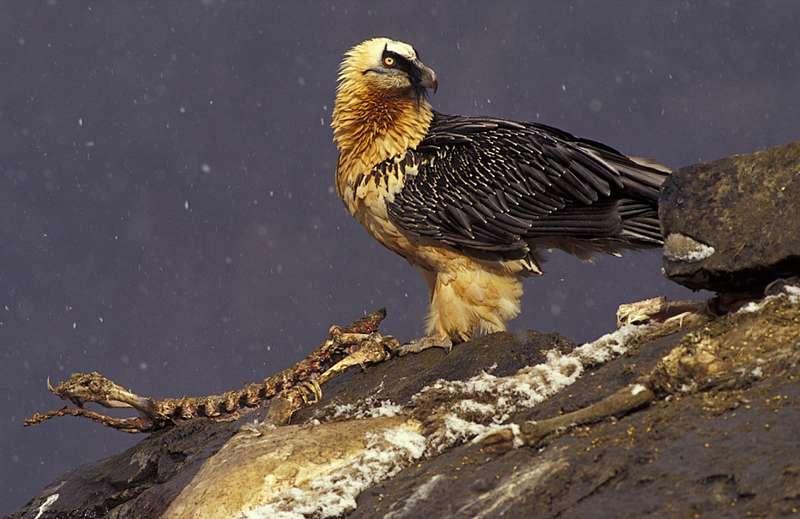
Its name comes from its unusual diet. It feeds almost exclusively of bones from other dead animals. It is the only bird which does this, it occupies the last place in the food chain, and it only eats when all the other scavengers have finished. This is why, while most of the vultures have bold head and long necks, this one has feathered head, a short neck with a distinctive feather which looks like a beard and a mask over its eyes.

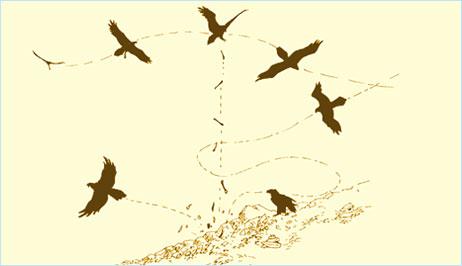
The Quebrantahuesos can swallow whole bones up to 20cm, but when bones are bigger, it uses a curious mechanism to break them in smaller pieces. It grabs the bones with its peak and starts flying high up in the sky, it looks for a big rock and, when it finds it, it lets the bones fall with the marksmanship of an archer and they break when they make contact with the rock.

Macintosh HD:Users:Pablo:Desktop:foto-ali1.jpg

I hope I have woke up your curiosity enough so that when we are in the Pyrenees, you can’t help but look up to the sky to see if you are the lucky one who find this amazing bird. If you do see it, please stop and contemplate its magnificence, it is worth the while.

Macintosh HD:Users:Pablo:Desktop:foto-alimentacion6_b.jpg

A brief history of Time

By Jack Clarke

Fellow Lions, I did not need to think hard about my topic. Marshalls, my employer, are a supplier of natural stone and hence I see rocks everywhere. I researched the history of the rocks we will walk on and hope you find the below of some interest.

The geology of the Iberian Peninsula consists of the rock formations on the Iberian Peninsula, which includes Spain, Portugal, Andorra, and Gibraltar. To the west, the peninsula is delimited by the continental boundary formed by the opening of the Atlantic Ocean. A collision of tectonic plates led to the formation of a new mantle. Iberia, which occupied the center of Pangea, the only terrestrial continent at the time, received a new suit made from 310 geologic and 290 million years due to the movement of tectonic plates. It modified the external and internal geology of the peninsula, when the movements gave rise to the destruction of the mantle that existed until that time, between 30 kilometers and 150 kilometers deep, and the formation of a new one today.

The Pyrenees form part of the huge alpine geological system. This 430 kilometre long, roughly east-west striking, intracontinental mountain chain divides France, Spain and Andorra. It has an extended, multi-cycle geological evolution dating back to the Pre Cambrian. The chain's present configuration is due to the collision between the microcontinent Iberia and the southwestern promontory of the European Plate (i.e. Southern France). The two continents were approaching each other since the onset of the Upper Cretaceous about 100 million years ago, and were consequently colliding 55 to 25 million years ago. After its uplift, the chain experienced intense erosion. A cross-section through the chain shows an asymmetric flower-like structure with steeper dips on the French side and more rolling formations on the Spanish side.

The Pyrenees stretch in a westnorthwest-eastsoutheast-direction over 430 km from the Bay of Biscay in the west to the Golf de Lyon and the Golf de Roses in the east, their width across strike varying between 65 and 150 km. They are bounded in the north by the North Pyrenees front, a major thrust fault along which units from the North Pyrenees have been transported over the southernmost part of the Aquitaine Basin their most northern reach. Their southern limit is the South Pyrenees fault. Here, thrust slices from the Sierras Marginales and their lateral equivalents are displaced southward. Yet in a larger, geologically more meaningful sense the Pyrenees continue farther west into the Basque and the Basque-Cantabrian chain. They finally disappear along the continental margin of Asturias. Likewise in the east, they do not just vanish in the Mediterranean, but rather pursue their course via the nappe units of the Corbières into low Languedoc and even into southern Provence. At their far eastern end in Provence, typical pyrenean fold trends are superimposed by alpine structures to be finally cut off by the arc of the western Alps.

The pyrenean chain in the larger sense is nearly a 1,000 km long.

The Death Zone

By Bernardo Felix

ber_enrique@hotmail.com

The ‘death zone’ is known in the mountaineering community as the altitude above sea level where the quantity of oxygen in the air we breathe is lower than the minimum that the human body cells require to live. Therefore, above that altitude the human body would start deteriorating and in some unfortunate cases this can lead to death.

This happens at altitudes above 8,000 meters and there are only 14 mountains above that level. There are two strategies to deal with the death zone, if you are trying to summit of these mountains. The first is to use artificial oxygen, it is simple, the lack of oxygen is replaced with bottled oxygen through your stay into the death zone. This strategy is widely used in the Himalayas and Karakorum, especially for the commercial expeditions. This method does not remove the technical difficulty of that particular mountain or the physical and mental endeavor that is required to get to the summit, but certainly makes it more easy, and some believe it to be a form of cheating.

For those who do not what to take with them bottled oxygen to the mountain, the strategy is to make their stay in the death zone as short as possible. For that a high altitude camp would be installed in the death zone threshold area. Physical and mental preparation are extremely important, as well as a very good acclimatization, as, without it, the stay in the death zone could last only minutes before developing high altitude sickness. Then you would wait for a window of good weather and try to assault the summit and get back to the high camp within 12 hours or less, if possible, sometimes it can take longer, but for sure you would avoid spending a night in the death zone.

The Pyrenees are not so high and dealing with lack of oxygen in the air will not be a problem. However, even at 3,400 meters people can develop altitude sickness, if the body does not acclimatize properly to sudden changes in altitude and pressure. For that reason, we will be progressively gaining altitude from our first day at Barcelona, and then moving to the base camp at El Poblado, etc. Keeping our bodies hydrated will always help and being fit for purpose, as well.

I am looking forward to my first trip to the Pyrenees and hope to meet the Lions team very soon.